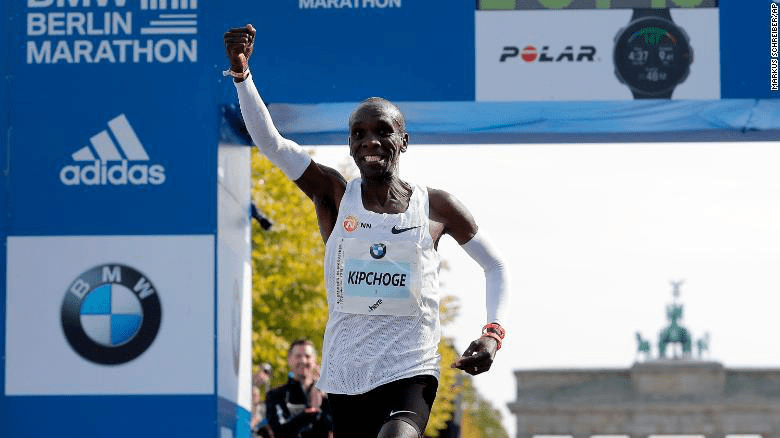
On September 17th at the Berlin Marathon, Kenyan runner Eliud Kipchoge smashed the world record by an astounding 78 seconds by crossing the finish line with a time of 2 hours, 1 minute and 39 seconds. He beat the previous record which was set by Dennis Kimetto way back in 2014. The time is even more amazing when you take in the fact that Kipchoge ran the last 17 kilometres solo without a pacesetter, which is supposed to be one of the hardest skills in marathon racing. This win adds to the Kenyan’s impressive marathon resume of 10 wins in 11 previous races.
However, it should come at no surprise that it was Kipchoge that broke this record, as in September of 2017 he partnered with Nike in the pursuit of breaking the elusive sub-two-hour marathon. In this project, called Breaking2, Kipchoge ran an unofficial marathon with ideal conditions set up by Nike at the Monza track in Italy. With a team of pacemakers, Kipchoge’s time was 2 hours and 25 seconds. This proved that it could be possible to break the two-hour barrier.
I have been left wondering how Eliud Kipchoge has run these blistering times, is it the conditions of the race, Kipchoge’s genes, his mental fortitude, or could it even be the shoes provided to him by Nike.
After watching the Breaking2 Project documentary by Nike on Youtube (linked below), I believe a sub-two-hour marathon is possible. The conditions of the Breaking2 project were ideal but they were not perfect. Listed below are the conditions present that day:
– Experienced champion runners (both competitors and pacemakers)
– The Monza racing track (chosen for its low altitude, short laps and calm weather conditions)
– Pacemaker runners and vehicles (substituted in and out to shield Kipchoge from wind resistance)
– Race start at 5:45 am
However, some possible changes could make the two-hour marathon possible:
– Temperature (was 12 °C, slightly higher than the ideal temperature for professional runners)
– There was light rain at the time of the marathon (better conditions would be overcast without showers)
As well as this I believe that one of the biggest factors to Kipchoge’s incredible performance was his shoes. Nike created a special shoe for the event, called the Zoom Vaporfly Elite. This shoe specifically designed for the runner’s individual feet used a new proprietary midsole foam called ZoomX. It was claimed by Nike to be “remarkably lighter, softer and more responsive” than traditional materials. Paired with Nike’s Flyknit upper material, the Zoom Vaporfly Elite is one of the lightest running shoes ever (trust me I’ve held a pair in my hands).
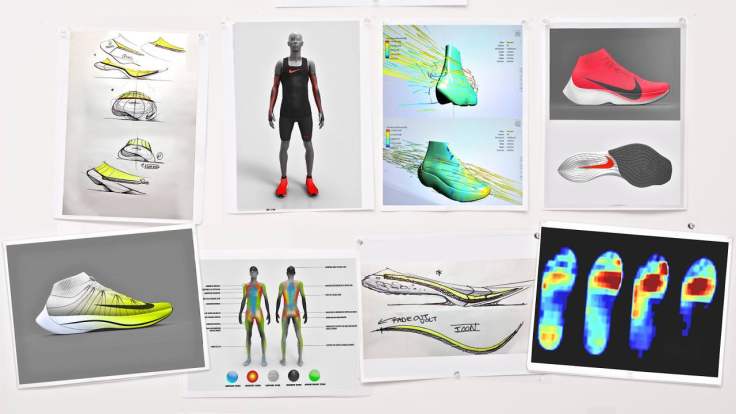
Though, one of the biggest advantages of this shoe was the addition of a unidirectional carbon fibre plate in the midsole. This basically acts as a spring to help propel a runner forward. No wonder why Nike claims it can make any runner up to 4% faster.
This shouldn’t take away from what Eliud Kipchoge has achieved, he was the main factor in the Breaking2 Project and without him, we would be no closer to a sub-two-hour marathon.
Nevertheless, we may never get to see this feat of athleticism accomplished because Kipchoge is 33 years old and isn’t getting any younger, and even the man himself claimed he had given his 100% effort in the race, I guess only time will tell if we ever see a marathon as fast as that again.
Bodie Edwards
Additional Links
Original article – https://edition.cnn.com/2018/09/17/sport/eliud-kipchoge-marathon-world-record-spt-intl/index.html
Additional article – https://www.theguardian.com/sport/2018/sep/16/eliud-kipchoge-smashes-world-marathon-record-berlin
Breaking2 documentary – https://www.youtube.com/watch?v=PMYjzj97i64
 Bodie's Sport Blog
Leave a comment